Page 3 of 10

BIM for FM - Are we nearly there yet? Thoughts from #tbim2016 operations and in-use summer conference

Share This:

On Wednesday 6th July we held our operations and in-use half day #tbim2016 conference which focussed on all things BIM and FM with keynote presentations from Deborah Rowland and Jacqueline Walpole, and an international keynote from Graham Kelly on BIM Academy’s Sydney Opera House project. There were over fifty people in the room but alarmingly only a smattering directly involved in facilities management. With such a vital role to play, #FM is in danger of “falling off a BIM cliff” says Deborah – so how can we spread the message and get more FM’s in the room? Let us know your thoughts.

stephenhamil

In the meantime, thinkBIM ambassador, Stephen Hamil has written his summary of the afternoon’s events. This post is reproduced below but originally appeared on Stephen’s excellent Construction Code blog http://constructioncode.blogspot.co.uk/

ThinkBIM - Summer Conference 2016

Yesterday I chaired the ThinkBIM Summer Conference - Soft data, hard landings and asset management.

The theme was looking at stages 7, 0 and 1 of a project. How the needs of the ‘in use’ stage of a project could be considered at the ‘strategy’ and ‘briefing’ stage.

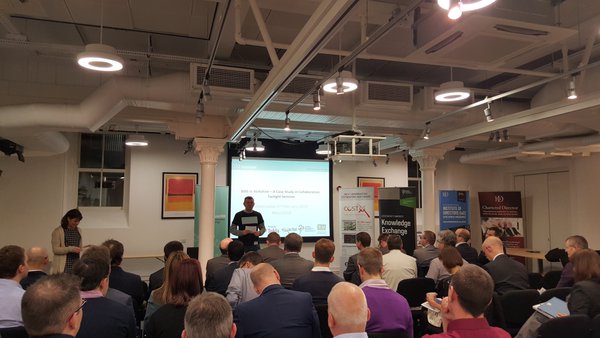
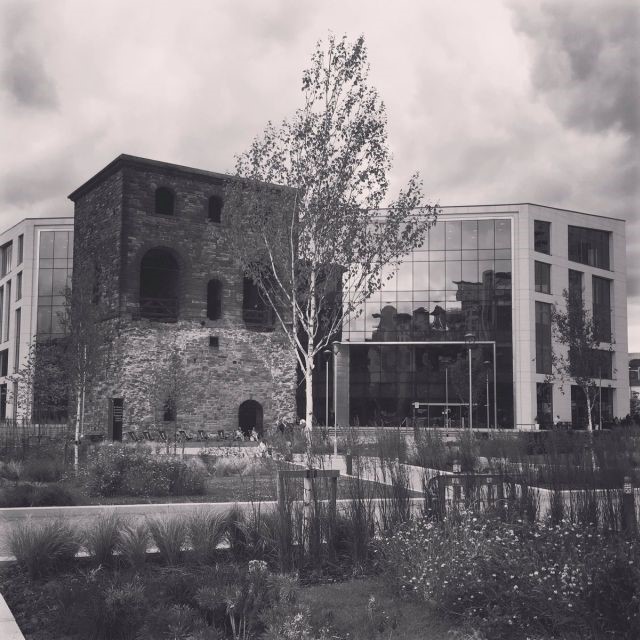
The venue for the ThinkBIM conferences is now the fantastic Squire Paton Boggs offices in Leeds City Centre.

The photograph below shows the lovely new setting that mixes the old with the new in terms of architecture…
BIMPOST1

A new setting for ThinkBIM

Deborah Rowland was the first speaker. Deborah has experience in facility management in the private sector for Barclays and also as one of the leaders in the public sector through her work with Ministry of Justice.

To find out more about the MoJ story please see the link below:
- https://prezi.com/b73gw4x6duec/moj-bim-story-bim-prospects-2016/

Deborah also talked highly of the work being done by Andy Green from Faithful+Gould on linking SFG20 maintenance specifications with NRM and Uniclass 2015 codes to help with data flow from design and construction into operations.
- https://www.fgould.com/uk-europe/articles/new-customisable-sfg20-changing-world-building/

Jacqueline Walpole then followed with her keynote. Jacqueline reflected back on the work she was involved in a few years ago with UCL Academy, BAM and Autodesk looking at FM and BIM solutions.
- http://www.bam.co.uk/how-we-do-it/case-study/ucl-academy

It was interesting listening to Jacqueline’s expertise and seeing how digitised the FM industry already is. The challenge, as always, is to try and get digital information to flow and not to have to start from scratch at certain phases of the project.
BIMPOST2

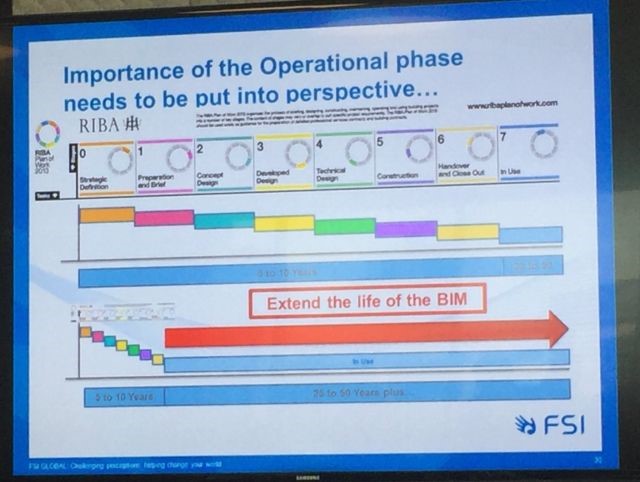
A to-scale version of the plan of work that nicely illustrates the importance of the ‘in use’ phase

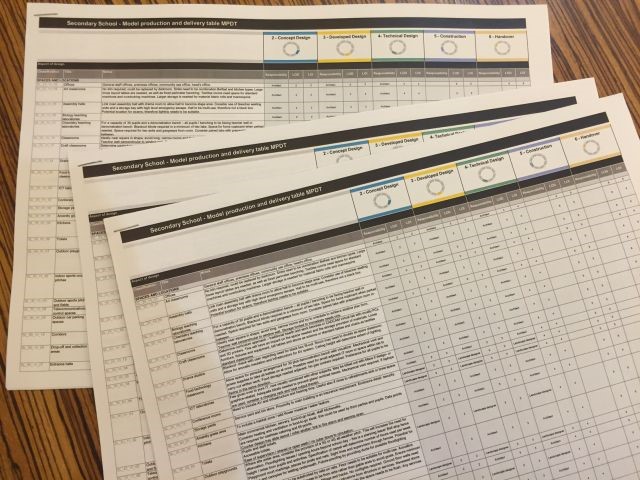
Following the opening two keynotes, it was time for the roundtables. For this event, I hosted a session looking at how lessons learned from the operation stages of previous projects can feed into an EIR template for future projects.
BIMPOST3

ThinkBIM Duncan asked for five take-home points from the roundtable. So here we go…

  1. A few years on now since the publication of PAS1192:2 and 3the participants are still not seeing many good examples of EIRs on projects. This includes projects where teams are working for extremely large clients who do many repeat similar buildings. The sample content on the BIM Task Group website and the documents made public from MofJ seem to be the best examples currently:
    - BIM Task Group sample EIR
    - MoJ sample documents
  2. Lessons learned on successes and failures can feed into the EIRs. A specific example given was repeated mistakes on wall covering solutions on multiple retail projects for the same client from different teams - could be easily avoidable if this information was captured digitally and fed into a single template.
  3. Big clients could make big savings by employing one person to standardised their processes and concentrate on good data kicking off a project. If you are building 12 offices/superstore/schools per year - could you save at least £5K per project by employing someone to get the digital process right?
  4. A solution that allowed information to flow digitally from strategy to brief into the information production phases of a project would be well received. I presented some concepts as to how this could maybe be done through a template plan of work that considered space types and system types and it was well received. For example, a high school will have an assembly hall and washrooms and piling systems and heating systems etc… - having lessons learned captured in a template which then fed into design to ensure a better outcome when the school is used is something that would provide value.
  5. Could the various sector specific BIM4 groupscontribute to sample templates that help their sectors? Sharing knowledge and making the industry more efficient? Many of the BIM groups have been receiving information from the central BIM Task Group over the last five years - is it now time for everyone to show how it can be done?

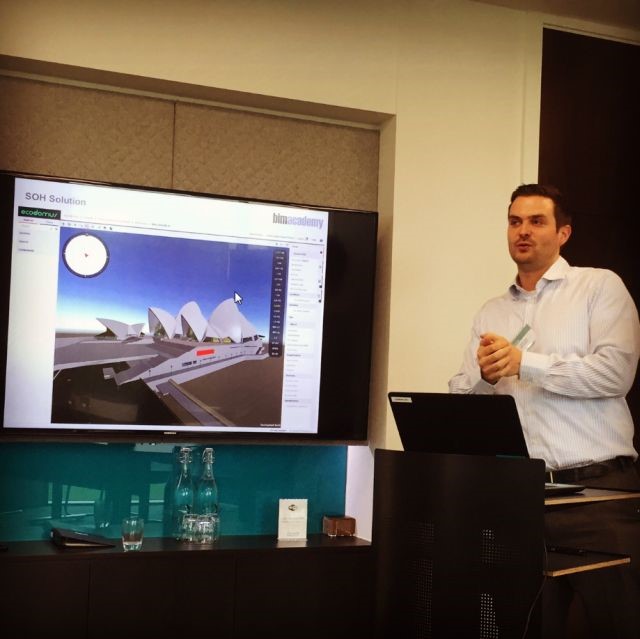
The final session was from Dr Graham Kelly from BIM Academy. He presented the work they have been doing in Australia with the Sydney Opera House.

This was a fascinating case study - plenty of web links below on how they are connecting many databases via an online 3D model viewer to meet the building’s daily FM needs.
- http://www.bimplus.co.uk/news/aecom-and-b1im-acade4my-t5eam-create-bimfm-/
- http://www.i2c.com.au/2016/05/sydney-opera-house-bim-implementation-video/
BIMPOST4
Graham from BIM Academy - using the 3D model, via a webbrowser for the FM of a major building

So all in all - another super ThinkBIM conference. Well done to all of the team that put it together and I look forward to the next one.

To view all of my posts from the ThinkBIM series over the last five years or so click below:
- http://constructioncode.blogspot.co.uk/search/label/thinkBIM

Soft Landings, Hard Data and Asset Management -> details of #tbim2016 summer conference revealed

Share This:

  • details of #tbim2016 summer conference revealed','1410949501326','width=700,height=500,toolbar=0,menubar=0,location=0,status=1,scrollbars=1,resizable=1,left=0,top=0');return false;" style="background-position: -30px -120px ">
  • details of #tbim2016 summer conference revealed','1410949501326','width=700,height=500,toolbar=0,menubar=0,location=0,status=1,scrollbars=1,resizable=1,left=0,top=0');return false;" style="background-position: -60px -120px ">
  • details of #tbim2016 summer conference revealed&mini=true&url=http://ckegroup.org/thinkbimblog/page/3/','1410949501326','width=700,height=500,toolbar=0,menubar=0,location=0,status=1,scrollbars=1,resizable=1,left=0,top=0');return false;" style="background-position: -120px -120px ">
  • details of #tbim2016 summer conference revealed','1410949501326','width=700,height=500,toolbar=0,menubar=0,location=0,status=1,scrollbars=1,resizable=1,left=0,top=0');return false;" style="background-position: -150px -120px ">
  • details of #tbim2016 summer conference revealed','1410949501326','width=700,height=500,toolbar=0,menubar=0,location=0,status=1,scrollbars=1,resizable=1,left=0,top=0');return false;" style="background-position: -180px -120px ">
  • details of #tbim2016 summer conference revealed','1410949501326','width=700,height=500,toolbar=0,menubar=0,location=0,status=1,scrollbars=1,resizable=1,left=0,top=0');return false;" style="background-position: -210px -120px ">
  • details of #tbim2016 summer conference revealed','1410949501326','width=700,height=500,toolbar=0,menubar=0,location=0,status=1,scrollbars=1,resizable=1,left=0,top=0');return false;" style="background-position: -270px -120px ">
  • details of #tbim2016 summer conference revealed','1410949501326','width=700,height=500,toolbar=0,menubar=0,location=0,status=1,scrollbars=1,resizable=1,left=0,top=0');return false;" style="background-position: -300px -120px ">
  • details of #tbim2016 summer conference revealed','1410949501326','width=700,height=500,toolbar=0,menubar=0,location=0,status=1,scrollbars=1,resizable=1,left=0,top=0');return false;" style="background-position: -360px -120px ">
  • details of #tbim2016 summer conference revealed','1410949501326','width=700,height=500,toolbar=0,menubar=0,location=0,status=1,scrollbars=1,resizable=1,left=0,top=0');return false;" style="background-position: -420px -120px ">
  • details of #tbim2016 summer conference revealed&pic=&ralateUid=&','1410949501326','width=700,height=500,toolbar=0,menubar=0,location=0,status=1,scrollbars=1,resizable=1,left=0,top=0');return false;" style="background-position: -450px -120px ">
  • details of #tbim2016 summer conference revealed','1410949501326','width=700,height=500,toolbar=0,menubar=0,location=0,status=1,scrollbars=1,resizable=1,left=0,top=0');return false;" style="background-position: -480px -120px ">
  • details of #tbim2016 summer conference revealed','1410949501326','width=700,height=500,toolbar=0,menubar=0,location=0,status=1,scrollbars=1,resizable=1,left=0,top=0');return false;" style="background-position: -510px -120px ">
deborahknowland

Operations & In-use half day conference

Wednesday 6th July 2016

Squire Patton Boggs, Leeds

Trying to find ways to drive wider adoption of digital data across the project lifecycle? Struggling to pass the construction phase benefits to asset management teams? Don’t know where to start with all those project-defining BIM documents? Here at thinkBIM we can help you solve all these issues.

Whether it is working out how to write practical Employers Information Requirements, mastering the BS8536 soft landings process, dealing with the hard facts of transferring data to facilities management teams or the overall management of digital asset data you can’t afford to miss this great opportunity to learn from the experts.

Our summer conference returns to Squire Paton Boggs hosted in their new offices in the Leeds and welcomes back Deborah Rowland to speak about the Government Soft Landings programme as well as an array of industry leading speakers hosting our famous round table discussions.

To get involved join us on 6th July 2016

at Squire Patton Boggs, 6 Wellington Pl, Leeds LS1 4AP

13:00 - 17:30 (registration from 12:30)

Click here to book your place!

bimsponsors

WITH THANKS TO OUR SUMMER SERIES SPONSOR
GroupBC provides data driven BIM software

We offer a UK hosted secure CDE platform for documents and data, with a 3D model viewer and a money saving process management module

www.groupbc.com
t: 0118 902 8543

Connecting Project Data beyond the site - Thoughts from June #tbim2016

Share This:

On Wednesday 1st June 2016 we held our second operations and in-use BIM seminar which focussed on the wider application of built environment digital data and how it can be usefully shared and utilised. ThinkBIM steering group member Paul Wilkinson shares his thoughts on the evening below.


Paul WilkinsonOpen Data, BIM and the Semantic Web

Guest Post by Paul Wilkinson. (Please note this post first appeared on Extranet Evolution on 2nd June - link here)

The latest ThinkBIM ‘twilight’ seminar, held in Leeds yesterday (1 June 2016), looked at the wider application of data relating to the built environment. Too many BIM events focus purely on the creation and use of data within a built asset project team; some extend the discussion to look at reuse of data for facility management, operation and maintenance; but few BIM events look at how some BIM and other built environment data might be connected to other data or even made more widely available, perhaps as open data.

Becoming more open

So far as BIM is concerned, the UK government’s 2011 insistence on BIM processes generating “open shareable asset information” is often assumed simply to be about ensuring data is interoperable: capable of being shared between different applications, operating systems and IT hardware. However, the first word is also strongly linked with the UK government’s wider digital agenda – the February 2015 Digital Built Britain strategy (strongly endorsed in the recent 2016 Government Construction Strategy and leading us towards BIM Level 3), for example, is not just about construction, but a fusion of industry strategies relating also to business and professional services, future cities and the information economy.

Discussions about open data are increasingly common, particularly in the UK, where the government has set out to be a world leader in creation and reuse of open data (it recently ranked first in an Open Data Barometer league table of international performance), with data valued as a key part of our national infrastructure (however, in December 2015, the Open Data Institute wrote an open letter to Lord Adonis, chair of the National Infrastructure Commission, arguing data is not being given “the same importance as our road, railway and energy networks were given in the industrial revolution and are still given now”).

The government’s open data push is being realised both centrally and locally, and is predicated on a belief in greater transparency, in ‘Government as a Platform’, giving tax-payers access to their data and other information derived from government investment in public services and assets. As well as central government’s National Information Infrastructure and Data.gov.uk, several local authorities have launched open initiatives, some creating dashboards sharing metrics generated from open datasets (look at the London Datastore, Open Glasgow, Leeds Data Mill, Bath:Hacked and Open Data Bristol, for example).

Open is everywhere

In addition to BIM-related open data conversations, I have attended Constructing Excellence meetings about open data (read Ben Pritchard’s blog post); I am part of an EthosVO-led, Innovate UK R&D project (SkillsPlanner) using open linked data as a resource to help address construction skills shortages; and I have led conversations in the Chartered Institute of Public Relations about the need for communicators to be more data-literate, more aware of open data issues and opportunities.

However, yesterday’s ThinkBIM event (held at AQL’s datacentre housed in a former chapel – now the beeping digital heart of Leeds) was more focused on the built environment challenges and opportunities.

  • While commonly regarded as a mapping organisation, Ordnance Survey’s core skills are in data, technology and interconnections. Echoing the Association for Geographical Information’s recent Foresight report (post), Ordnance Survey’s Paul Griffiths described geospatial data as the ‘glue’ connecting data about built assets to other data about the environment and about social aspects of the areas around those built assets. in February 2015, OS launched OpenMap, a new digital map bringing open geospatial data to mobile and web platforms. Then, using examples drawn from Thames Water projects undertaken using the ‘Semantic BIM’ platform provided by SaaS vendor GroupBC (formerly better known as Business Collaborator), Griffiths showed how data about existing building types and heights, flood risks, crime, employment and education could be used to augment existing decision-making tools (“project design need no longer happen in splendid isolation”).
  • ODI Leeds’ Tom Forth showed various examples of data captured by Leeds City Council and made open, including a powerful example of how public building energy use could be cross-referenced with IT data relating to office occupancy to demonstrate when and where energy savings might be made (making “ten million lines of data” open, he said, also helped make that data usable and bridged gaps that previously existed between FM and IT departmental silos). Datasets about empty buildings, housing density and open spaces could also be accessed to inform public debates about housing shortages and planning decisions.
  • GroupBC’s CTO Steve Crompton then provided a ‘RetroBIM’ critique of legacy information, suggesting around 98% of current built asset data was effectively trapped in drawings and documents held in internal file-sharing systems, not lodged in databases where they could be used as a basis for decision-making (“Let’s democratise some of that data, put it in the cloud,” he said). He briefly described how GroupBC’s Semantic BIM platform could provide vital contextual data to support efficient decision-making for planning, designing, constructing and operating built assets.

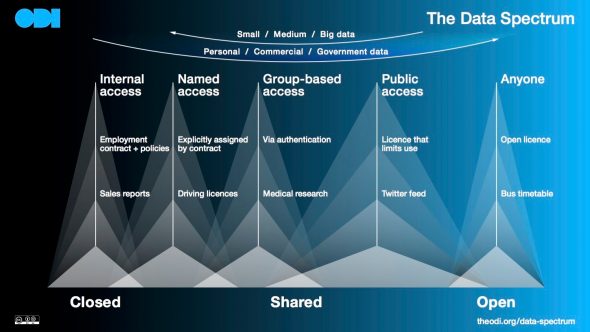
dataspectrum

During the panel discussion, it was clear security, commercial confidentiality and personal privacy concerns all need to be addressed in selecting what data might be made open (the Open Data Institute has a useful ‘data spectrum’ diagram showing the continuum from closed to open data). But Tom Forth stressed many bodies currently hold huge volumes of dormant data that could be made open (surely, such data will only have value if someone does something with it?).

Government departments are already opening up some of their data reserves so that they can be explored and exploited. In June 2015, DEFRA, one of the most data-rich departments in Whitehall, opened up thousands of datasets so that they could be more widely used to improve the quality of our natural environment.

It was also clear that the industry currently known as construction is still at an early stage in not just its BIM journey (the BIM Level 2 deadline passed less than two months ago) but also in its open data journey. To re-use an argument I’ve given in recent lectures and conference keynotes, we have only just started to move from “common paper environments” to “common data environments” – and open data is part of the more long-term BIM Level 3 picture (is it just a coincidence that the ‘semantic web’ is sometimes referred to as Web 3.0).

groupbclogoGroupBC: semantic BIM differentiation

I speak regularly to the main SaaS collaboration vendors active in the UK, and GroupBC is the only one actively developing semantic web capabilities. That is not to say that rivals aren’t thinking about integration between their platforms and other information systems – APIs are a key part of Viewpoint’s roadmap, I heard at last week’s customer summit, for example – but GroupBC is pioneering the use of linked data to build new products and enhance the capabilities of existing tools.

Its ‘Semantic BIM’ technology moves beyond the typical uses of BIM for visualisation, clash detection, construction sequencing, etc, and opens up a potentially huge web of related data, from ‘location intelligence’, to data shared by or licensed from other commercial or public bodies, and to data held in internal corporate systems. BIM, therefore, becomes just part of a bigger built asset data picture – the semantic web allows teams to exploit far richer seams of data, potentially unearthing vital ‘nuggets’ of information for accurate and timely decision-making.

Group BC have also written an excellent post on their own blog about their work with Semantic Web - please check it out at the link below. http://www.groupbc.com/blog/2016/06/03/connecting-project-data-beyond-the-site-boundary-thinkbim-2016/

———-

A selection of the best tweets and images can be found at the storify below. Please keep checking back as presentations will also be available shortly.

ThinkBIM’s next half-day conference, focused on BIM for operation and in-use, is at Squire Patton Boggs new offices in Leeds on Wednesday 6 July 2016 – more details to follow.

CIAT Professional Development Day

Share This:

CIAT 

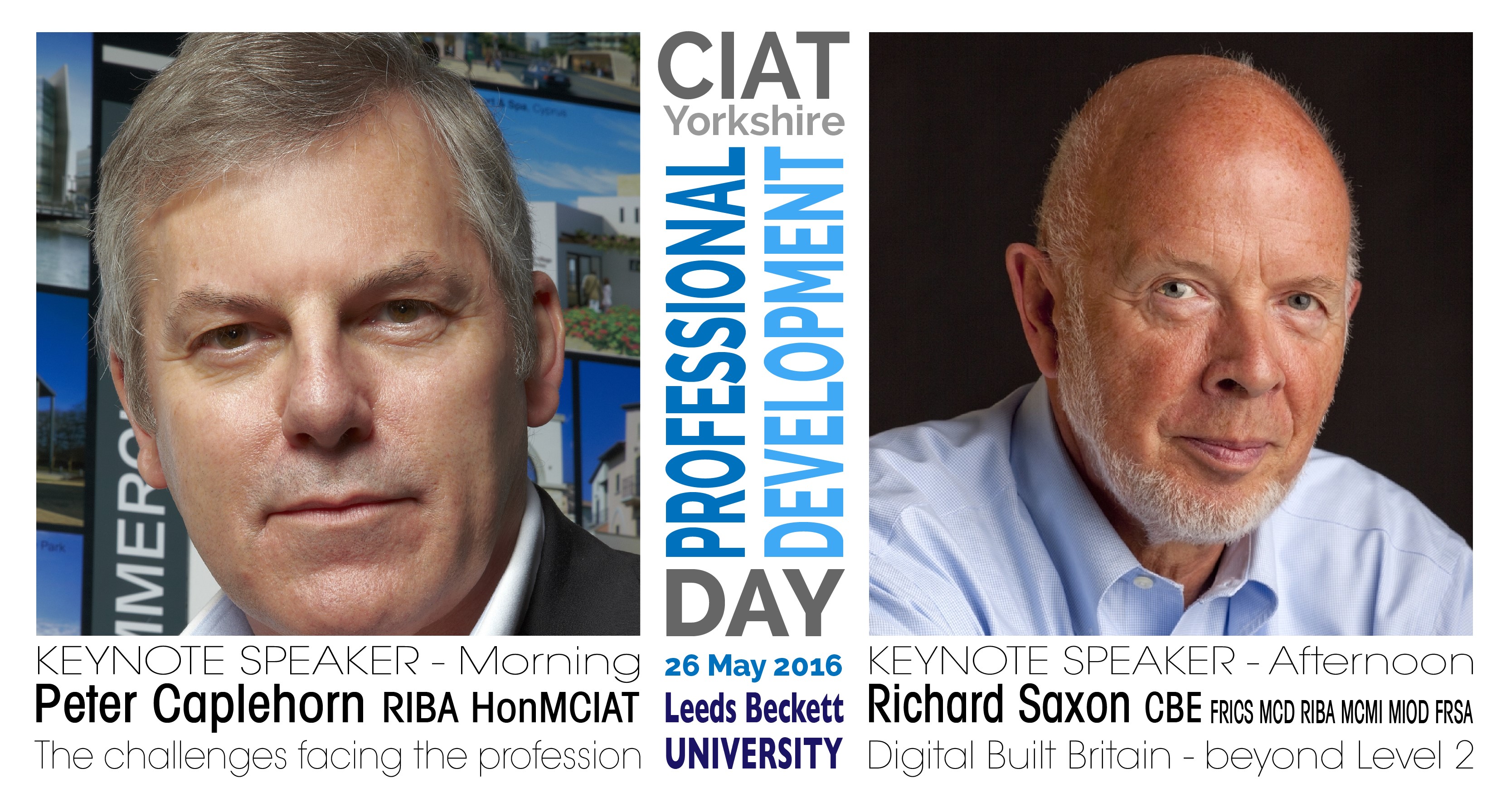
Welcome to the second of our days of learning and opportunities for professional development that the Yorkshire Region of CIAT is hosting in conjunction with Leeds Beckett University. We continue to make freely available value added presentations given by knowledge rich presenters on topical subject areas within the construction industry; a collection of which we consider you could not find anywhere else.


Building on the unprecedented success of our inaugural event in June 2015, this year we have managed to secure the services of two speakers whose names are instantly recognisable as major players within the realm of UK building design and construction.


Peter Caplehorn will open the day with his Keynote presentation on the challenges that face the profession and the wider industry. If you have heard Peter speak before, or even if you haven’t, this is not one to miss. To get the day back on track after lunch Richard Saxon will offer his unique experienced brand in presenting how Building Information Modelling will be influencing a Digital Built Britain as we work towards level 3.


The full programme can be found at the following link http://ciat-yorkshire.org.uk/wp-content/uploads/2016/04/CIAT%20Yorkshire%20Professional%20Development%20Day%2026%20May%202016.pdf


Our thanks go to our event supporters, RIBA, CIOB, RICS, CIBSE, CABE, ICE, and Centre for Knowledge Exchange at Leeds Beckett University. We also offer a big thank you to the event sponsors, without whom it could not happen; Knauf Insulation, Graphisoft, Beattie Passiv, LABC, Minerva Appointments, Leeds Beckett University and CIAT Yorkshire.


BOOKING DETAILS


Please book via the link below;

http://www.ciat-yorkshire.org.uk/events/professional-development-day/


From PIM to AIM - First steps into BIM for FM (we love acronyms!)*

Share This:

4thmayspeakers

The construction industry is still in general getting to grips with BIM (Building Information Modelling), the facilities management industry has been doing CAFM (Computer Aided Facilities Management) for a good while but how do we splice these two technological solutions together to deliver better assets across the lifecycle?

We have three speakers who are battling, supporting and guiding teams through this process and will be sharing their thoughts and ideas on how to do this.

David Hemmings, Head of Estates at Leeds Beckett University

Dr Medina Jordan, BIM (FM) & Asset Management Advisor at Skanska Facilities Services

Natacha Redon, Project Manager / BIM Co-ordinator at Identity Consult

*PIM - Project Information Model | AIM - Asset Information Model

INTRODUCING OUR SUMMER SERIES SPONSOR

groupbclogo

GroupBC provides data driven BIM software.

We offer a UK hosted secure CDE platform for documents and data, with a 3D model viewer and a money saving process management module.

www.groupbc.com

t: 0118 902 8543

BOOKING DETAILS

To get involved join us on 4th May 2016

at Old Broadcasting House, Leeds Beckett University,

Leeds, LS2 9EN

17:30 - 19:30

Click here to book your place!

SponsorsSummer2016

May the fourth be with you! thinkBIM returns with our Operations and In-Use Summer Series

Share This:

Here at thinkBIM we’ve always championed the use of data across the entire lifecycle of an asset. We also know that the design and construction industry can sometimes seem to speak a different language to that of the facilities and asset management industry. The translation, transition, transformation of construction phase BIM data in CAFM and asset management systems and processes doesn’t always seem to go as smoothly as suggested. So here at thinkBIM we are pleased to offer help and support to anyone trying to get to grips with these processes.

Wednesday 4th May 2016, 17:30 onwards, Old Broadcasting House, Leeds

In our first twilight seminar of the summer series we will be bringing clients and their advisors together to explain the hows and whys of BIM for FM. How do clients set about engaging with asset information, why should they do this and what can they do to become expert procurers of digital data for their assets?

Wednesday 1st June 2016, 17:30 onwards, Salem’s Chapel, Leeds

Our second twilight seminar offers a unique opportunity to visit a Leeds data centre in a converted Victorian Chapel and hear more about how built asset data links to the wider aspects of both Geographic Information Systems (GIS) and the advantages of using Open Data sets to improve digital outcomes.

Wednesday 6th July 2016, 12:30 onwards, Squire Patton Boggs, Leeds

Our summer conference returns to Squire Paton Boggs - but hosted in their new offices in Leeds - and welcomes back Deborah Rowland to speak about the Government Soft Landings programme and Kath Fontana of ISS. We already have some great round table discussions sorted for our conference and will announce more details of these soon.

Click here to book your place!

SummerSponsors

What good BIM looks like: Round-up of #tbim2016 Spring Conference

Share This:

On Wednesday 23rd March we brought our thinkBIM Spring Series 2016 to a close with our sold-out half-day conference at WSP Offices in Leeds, looking at the best of BIM over the last five years and where the industry is in relation to the BIM Level 2 mandate. The event attracted over 60 people representing architects, clients, consultants and contractors all at various stages of their BIM journey and was chaired by long time thinkBIM ambassador, Stephen Hamil at RIBA Enterprises. Stephen has done his own excellent summary of the day over on his blog Construction Code which you can read here http://constructioncode.blogspot.co.uk/2016/03/think-bim-spring-conference-2016.html

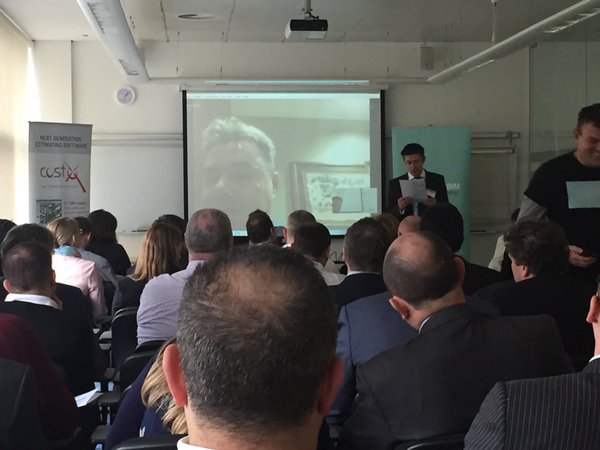
Our first speaker was our UK keynote, David Philp. He was of course meant to be at the conference in person but his BIM duties took him overseas unexpectedly, so he did his presentation over the web, seamlessly (well almost), from a busy airport lounge in Perth. Dave gave a whistlestop overview of the last five years, reviewing the level 2 journey and the benefits it has brought to date. Dave will be making a recorded version of his presentation with slides which we will share on the blog as soon as we receive it.

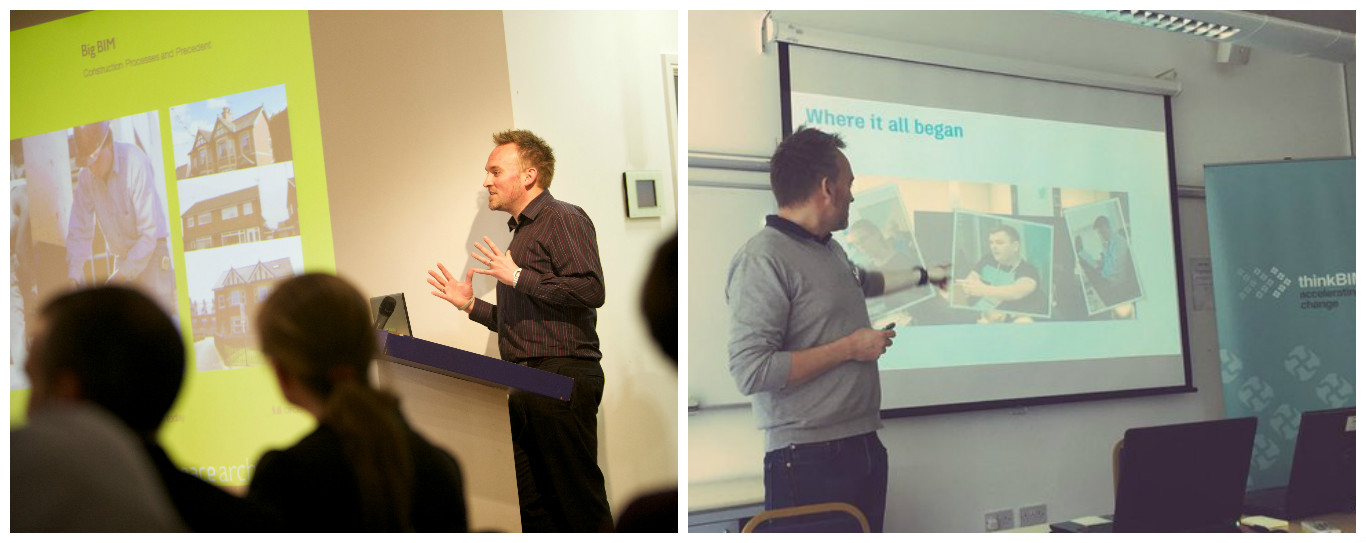
CollageJamesAustin

James Austin, Then and now. From our scoping event in 2011 (left) to the present day (right).

Next up was James Austin, Product Manager at Autodesk and an original founding member of thinkBIM. James was also a speaker at the inaugural thinkBIM event nearly five years ago to the date of the conference. James delivered his personal overview of BIM over the last five years highlighting the landscape that BIM came about in, the development of the UK BIM task groups and its journey in line with policy and Construction 2025. Full of good stuff, you can watch and listen to the full presentation at the following link,

https://autodesk.box.com/s/rqr9ecf2c0nasa708huklqebib3rh69m .

tbim2016-Conf-33

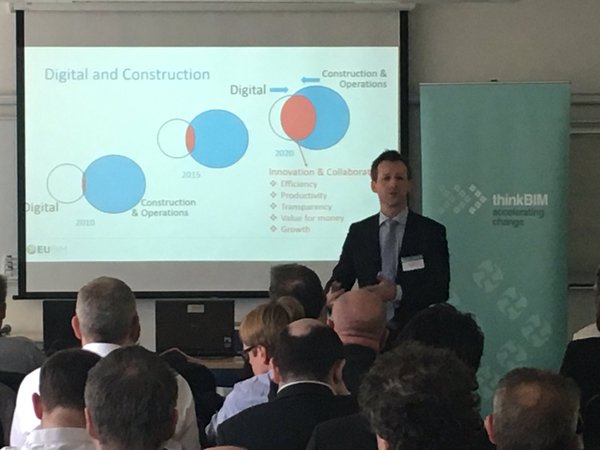
Adam Matthews: EU BIM aim is to have a European digital single market for construction 2020

Following James we then welcomed Adam Matthews, Chair of the newly formed EU BIM Task Group who presented on the innovations that UK BIM has created and how that is now feeding into European BIM Strategy and EU guidelines on publically procured projects. It was clear from Adam’s presentation that BIM is an area where the UK has the potential to lead the rest of Europe. Adam’s full presentation can be viewed at the Issu link below.

After the presentations the groups convened for roundtable sessions, notes of which will be posted on the blog shortly. After our two roundtable sessions, the conference was brought to a close with a Q & A session featuring James and Adam and joined by Jason Richards from WSP and Tom Oulton from the Yorkshire and Humber BIM region. The Q & A raised a couple of reoccurring issues; i.e. software competition and compatibility, sharing and IP issues. However the consensus of the panel was that we need to share and get our information out there… principally because it’s probably out there anyway. Attendees were then treated to a well-earned BIM beer and curry provided by the excellent Friends for Dinner in Leeds. Thanks to our event hosts, WSP, network sponsors, Trimble Tekla, and our series sponsors, Exactal for all their support making Spring #tbim2016 a success.

FebSponsors

with thanks to our sponsors and supporters

Our storify summary of the best tweets and images from the day can be found at the link below. In the meantime thinkBIM will return on 4th May with our summer series on FM and Operations. This series will feature twilight seminars on 4th May and 1st June as well as our half day conference on 6th July. Mark them in your diary now!

#tbim2016 write-up: BIM in Yorkshire, a case study in collaboration

Share This:

BIM-Feb2016

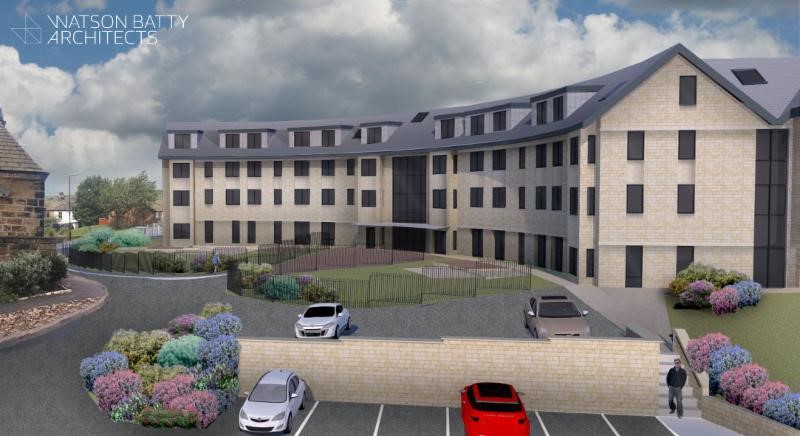
On 3rd February we welcomed a full house to Old Broadcasting House in Leeds for the first event in our thinkBIM #tbim2016 spring series, a “BIM in Yorkshire” case study of the benefits of digital collaboration. For this seminar, we welcomed Henry Boot Construction and their collaborative team partners to present on their work on the Extra Care Housing Scheme in Yeadon, near Leeds and Bradford Airport.

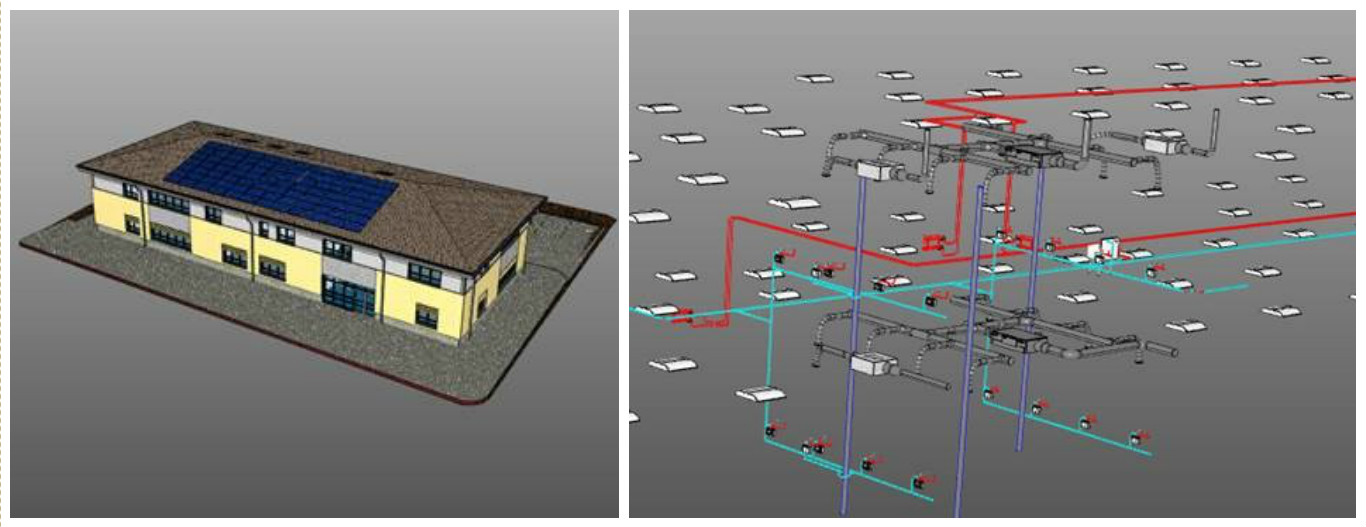
It is always great to hear about teams recycling and reusing data and this project was no exception with our presenters, Henry Boot’s Kevin Dight and Philip Lambourne and their wider team from Watson Batty, Dudleys Consulting Engineers and Framedeck Consulting Ltd, giving examples of quantities checks, planning and clash detection and construction simulation on the project.

The event was chaired by Josie Rothera, Chartered Civil Engineer and Senior Lecturer at Leeds Beckett University who opened by saying how pleased she was to see how thinkBIM events have grown and evolved over the last few years now offering real case studies of BIM in practice. Thanks Josie!

Kevin Dight opened with a brief overview of Henry Boot’s BIM journey, which started with a direct from the MD to “look into this BIM thing”. Kevin became the BIM Champion, they purchased Revit and Navisworks and they started learning very quickly (his words). One of their first BIM projects in 2012 was at the Bifrangi plant in Italy. Sadly they were unable to use BIM throughout as the steelwork was given to an Italian subcontractor who didn’t use BIM, therefore the full benefits were not seen. Lesson learnt -> Lonely BIM is not as effective.

Kevin also had the following advice for implementing BIM; know your drivers – understand why are you implementing the technology and what you want to get out of it and make sure your strategy is built around this. Finally, break your implementation down into manageable steps, use on some example projects first and build up your experience.

Kevin then handed over to Phil, the new BIM Champion for Henry Boot to talk more about the Yeadon project. More info about the specifics of the project can be found in the presentations below and the accompanying storify below that.

The team concluded by talking about the benefits that using BIM had brought to their business which included greater client engagement, better cross team communication, reducing RFIs, better coordinated drawings and best of all… less email! It was great to see how much the team had also got out of the enriched learning experience and knowledge exchange that collaboration through BIM can achieve, something which is often not spoken about as a benefit of BIM but clearly a very tangible and positive outcome for Henry Boot’s team.

The next thinkBIM event will take place on the 9th March and is entitled BIM, DfMA and the black art of MEP, details here. Due to Easter, our Spring #tbim2016 conference will follow a fortnight later on 23rd so that’s a double dose of thinkBIM-ery in March. Don’t say we don’t ever spoil you!


#tbim2016 continues with… BIM DfMA and the black art of MEP

Share This:

Collage

***PLEASE NOTE THAT DUE TO POPULAR DEMAND WE HAVE HAD TO CHANGE THE VENUE OF THIS EVENT TO THE ROSEBOWL***


Wednesday March 9th 2016

Twilight seminar

The Rose Bowl, Leeds - Room RB437, theatre B

We are pleased to be hosting another joint event with CIBSE, this time focussing on how Building Services contractors and manufacturers are developing their digital processes and content to assist project teams.

BIMstore will be talking about their work with major building services manufacturers, why creating these objects is important for the industry and how they are now being used across the lifecycle of projects. There has even been mention of how they work with another thinkBIM favourite topic - Product Data Templates.

G&H Building Services will be describing how they have approached BIM adoption in their business - a great case study in how they have developed their digitals services in ways that suit their business and the benefits this has brought.

Turner & Townsend will also be explaining why the data in building services models is so important and demonstrating how cost certainly can be derived from this information. Focussing on quality, quantification and estimation the team from T&T will offer a great insight into 5D workflows.

To get involved join us on 9th March 2016

at Old Broadcasting House, Leeds Beckett University,

Leeds, LS2 9EN

17:30 - 19:30

Click here to book your place!


FebSponsors

BIM in Yorkshire - a case study in collaboration

Share This:

BiminYorkshire

Wednesday February 3rd Twilight seminar

Old Broadcasting House, Leeds

17:30 to 19:30

We all know its BIM up north and here’s the team to prove it. At the first event in our Spring series we will hear from Henry Boot Construction who will be explaining their BIM journey and showcasing the benefits of digital collaboration with the team on the Extra Care Housing Scheme at Yeadon, near to Leeds Bradford Airport.

It’s always great to hear about teams recycling data and this project is no exception with examples of quantities checks, construction simulation of the RC frame, planning and clash detection, resolving complex roof geometry, its uses by the structural steel subcontractor as well as the general space planning of a curved building.

Our Speakers include,

Kevin Dight, Henry Boot Construction

Philip Lambourne, Henry Boot Construction

Simon Collins, Watson Batty Architects

Paul Brownlow, Dudleys Consulting Engineers

Andy Volkes, Framedeck Structual Steel Work

Come along to hear about the team’s excellent collaborative work on this flagship scheme!

Click here to book!

FebSponsors


« Older posts Newer posts »

© 2017 ThinkBIM

Theme by Anders NorenUp ↑