ThinkBIM

Open Knowledge Exchange and Sharing

Category: BIM Collaboration (page 1 of 2)

Announcing our Autumn programme - ‘thinkBIM: the countdown to 2016′

Fresh from our summer hiatus, we are pleased to announce the details for our star-studded thinkBIM Autumn series themed around design and pre-construction. Not only are we bringing back our unique simulcast event on 14th September but our Autum series will also tackle the previously unexplored areas of BIM in infrastructure and external works.

Duncan Reed, chair of thinkBIM says “we are really pleased to offer another great series of thinkBIM events. The network continues to go from strength to strength; addressing the important issues for the construction industry and offering case studies, knowledge sharing and lessons learnt from people and organisations who are finding lots of different ways to deliver projects and services digitally”

If you are on social media, you can keep up to date with what we are up to by using the hashtag #tbim2015. Otherwise get in touch with our team on 0113 812 1902 if you want to know more or want to get involved!


Autumn Series (7th October, 4th November & 2nd December)

Building Bridges with BIM

On October 7th we will be joined by members of the AECOM Mott MacDonald Joint Venture team who are working on the design of the Network Rail Northern Hub. Join us for their fantastic case study of the Ordsall Chord bridge; BIM for infrastructure and new methods of contract delivery using digital workflows.

buildingbridgeswithBIM

BIM for Regulations

On the 4th November we will be taking a look at the regulatory side of BIM - how digital processes can ensure better compliance and reduce risk on projects. Our speakers will be covering how BIM delivers improvements for Building Control, can be used to practically implement the requirements of the Construction, Design and Management (CDM) Regulations and case studies around the real contractual implications of delivering BIM on project.

BIM outside the building

BIMoutside


In another first for thinkBIM we are really pleased to announce our December conference will be themed around all things BIM and Infrastructure. On 2nd December we will be holding a ‘BIM Outside the Building’ conference. An opportunity to discuss how digital processes should be implemented on infrastructure and external works. Come along to help debate and shape how this part of the industry should be digitalised.

There will be speakers from the Environment Agency, the Highways Agency and the Landscape Institute. We are also looking to run a technology vendors showcase to help the delegates understand the BIM tools that already out there.

Follow the link below to book for any of the events above or for the full series at a discounted rate

Bookhere

——-

thinkBIMxtra 2015

But before all of that we are pleased to announce the return of our second thinkBIM simulcast event.

Taking place on the evening of Monday 14th September, in conjunction with Pinsent Masons, we are pleased to announce a total of 6 speakers across two venues in Leeds and London who will be presenting on the following theme;

‘Level 2 - Are we nearly there yet?’

The UK Government’s 2016 deadline is rapidly approaching but is the construction industry really up to delivering everything that is required to be ‘fully Level 2 compliant’? Joining us to give their own views on these themes will be an Architect, an Engineer, a Quantity Surveyor, a Main Contractor, a Specialist Subcontractor and a Supplier. What could possibly go wrong?

We are pleased to announce the following speakers;

  • David Emery, Director, Virtechs Limited
  • Rob Hutchinson, Design Manager, Byrne Brothers (Formwork)
  • Billy McCormick, Sales Engineer, Mabey Hire

more names to be confirmed very soon!

So - two soap boxes, six leading speakers presenting from two fantastic venues and one great debate on the importance or otherwise of the Level 2 deadline.

Spaces for this FREE event are limited so book early to avoid disappointment.


leedspic

To book the LEEDS event click here


London

To book the LONDON event click here


Get Involved!

Plans are already in hand for events right through to the middle of 2016 but we are always interested to hear about people, businesses and project teams who may want to share their own experiences at our events. If you have a story to tell please contact thinkBIM at [email protected]

BSI BIM Conference 2nd December 2014 #BISBIM2014

Write-up by thinkBIM ambassador, Duncan Reed (@djhreed67)

On December 2nd I wandered along the banks of the Thames, through a very damp London to my second BSI BIM Conference. It had been twelve months since I last attended and BSI has been very busy publishing BIM guidance in the shape of PAS 1192-3:2014 and BS 1192-4:2014 not to mention the even more recent announcement of PAS 1192-5 for Data Security and the fact that our chair, Richard Waterhouse, is also in charge of the NBS-led consortia charged with delivering the Digital Plan of Works and ‘completing’ classification in the form of Uniclass2. But those two little tasks were for another day.

As is traditional for the start of any UK BIM Conference the proceeding opened with Dave Philp (@thephilpster) Director of BIM at Aecom and BIM Task Group, setting the scene, reviewing progress to date and outlining the brave journey into Level 3 – sometime.

davephilppresentationImage from David Philp presentation

Our second speaker was Anne Kemp (@ACKEMPO), Director, BIM Strategy and Development at Atkins for some fantastic, informative, telling and challenging words on BIM as behavioural change. If BIM really is 80% people and process; 20% technology it does make me wonder why we don’t have more people like Anne explaining how to manage this seismic shift in the way construction should be managed and delivered. If you get an opportunity to hear her speak my advice is grab the chance. If you can’t then read this book she recommended – Mind Change: How digital technologies are leaving their mark on our brains by Susan Greenfield.


Image from Anne Kemp presentation

After Anne I heard my first ever ‘Security Issues in BIM’ presentation by Alex Luck, Principal of A Luck Associates. BIM may be all about collaboration and sharing but what happens if the data gets into the wrong hands. Some real challenges here for the industry to grapple with – particularly when some are still trying to hold onto data rather than even share in the first place. I hope data security doesn’t get hijacked as a reason by some not to do BIM. The PAS 1192-5 draft for consultation is due out early in the New Year.

Before our first coffee break we were treated to an overview of the 1192 family by Mervyn Richards, OBE, and Director of Avanti Partnership. Merv gave a great review of where we have come, what we’ve achieved and what is still to be done. Key message from him –

“You can’t do Level 2 yet – all the documents aren’t yet in place!”

Coffee break over and we returned to our fourth floor basement business suite to hear Paul Oakley (@OakleyCAD), Associate Director BIM at the BRE explain what the BRE has to offer individuals and businesses for BIM training and support. But Level 2 certification? Hmmm.

Next up was my old Balfour Beatty Group friend Andy Powell (@ajbpow), Head of Building Information Modelling at Parsons Brinckerhoff. Andy gave a great overview on how a business needs to define BIM goals as well as frameworks for a Digital Strategy. PB have adopted the hashtag #digitalpotential More information at their website (and the video) http://pbworld.com/digitalpotential/


andykemppresentation

Image from Andy Powell presentation

Rob Manning gave a great overview on PAS 192-3 and in particular the role of the client whilst David Churcher provided some really useful examples of how this document can be implemented. His examples of what Organisational Information Requirements (OIRs) might actually look like were really useful.

davechurcherpresentation

Image from David Churcher presentation

Keeping up?……… just about but fortunately we all had an opportunity to break for lunch, network, or just catch up with BIM colleagues.

Two o’clock and we were all back in our chairs to here Jon Kerbey, Head of Management Systems on HS2 and the man charged with delivering BIM on this scheme. HS2 has already published a BIM Upskilling report this year and Jon outlined some of the finding. Have to say they sound optimistic to my mind but let’s hope UK construction really does rise the challenge of delivering HS2. Their full report can be found at http://assets.hs2.org.uk/sites/default/files/HS2%20Supply%20Chain%20BIM%20Upskilling%20Study%2013-06-14.pdf

After Jon we were treated, and I use the word wisely, to a shock and awe presentation worthy of Dave Philp or even Paul Morell. Nigel Davies (@NigelPDavies), Director at Evolve, pulled no punches in de-mystifying, de-bunking and generally giving BIM a good roughing up. But in particular businesses over-complicating BIM and over-stating their abilities were his key targets. Let’s get Level 1 right, a sentiment that has been echoed less vocally by previous speakers too. His statistics on where construction think they are, and where they actually are, on the Bew-Richards BIM wedge put me in mind of the BIM analogies with teenage sex.

BIM is like teenage sex

Everyone talks about it…

Nobody really knows how to do it

Everyone thinks everyone else is doing it

So everyone claims they are doing it!

The final speaker the delegates were treated too, after another dose of caffeine and cake, was Nic Nisbet @nicknisbet - the personification of COBie for the UK(?). Nic gave a great overview of the recently published BS1192-4 Code of Practice in his usual dry manner. Also good to hear that COBie for Infrastructure guidance/case studies are due out soon too.

All the days Twitter events have been captured by the Storify link below https://storify.com/djhreed67/bsi-bim-conference-london-2nd-december-2014

But the last part of the day was handed over to the delegates for a group discussion session. We were split into 5 groups and asked to review the following questions

15.50 – 16.30 Table discussions

How to improve the effectiveness of processes on projects?

How would you promote BIM as a natural progression within the organisation?

Commitment to BIM – what do we need to do – BIM shopping list

So with a group of about 19 we attempted to answer these questions in the time allowed. What did we end up with? A wide-ranging BIM discussion, pretty much around these points but not necessarily being focussed enough to answer the questions, ensued. Despite not having my trusty bundle of Sharpies from last year I was voted in (??) as Group 3 scribe and presenter.

So, in the true style of BIM as a disruptive technology I amended questions to better fit the answers we were identifying.

How to improve the effectiveness of processes on projects?

How would you promote BIM as a natural progression within the organisation?

Commitment to BIM – what do we need to do – BIM shopping list

So re-focussing the question to an answer of

Improve processes, promote BIM (get) commitment

But as a more full answer and summary of discussions we came up with the following response for our Chair, Richard Waterhouse.

  • It’s all about people – and businesses need to determine who is best placed in their business to deliver BIM (it’s not necessarily the IT Manager – remember BIM is a process not technology)
  • We are looking at a paradigm shift, we can’t just tinker around the edges – a great point made by Andy Powell, Parsons Brinckerhoff, in his presentation earlier in the day.
  • Change needs to start with the individual, a person needs to want to change in the first instance. But change also needs to happen at all levels with business leaders giving leadership
  • Businesses need to understand, and address, the fear of change. Change management is vital for BIM to succeed.

  • Businesses need to identify problems, they are normally too quick to offer solutions.
  • Businesses also need to learn to work better with new tools; but these tools need to be appropriate!!
  • Businesses also need to plan for change a long time before the change is going to occur. You just can’t rock up for a project start up meeting and expect to deliver BIM. Also remember that one size most definitely does not fit all – solve the issues not the symptoms.
  • Be aware that some changes will happen so rapidly that there is no time to consider them – let them happen!
  • Still be mindful of commercial realities. The group had a long discussion on the (usual) subject of Capex and Opex. But still very valid at present for the industry. Get the Capex and Opex trams together, shake them up and bring out the best from them both. Don’t think of projects, think of assets, in fact don’t even think of assets think of portfolios. But when thinking this way people and businesses still need to ensure that the micro and macro scales are still aligned.
  • BIM is business transformation – as an industry we all manage projects, BIM is ‘just’ another project to manage.

GreenBIM - Think BIM and Green Vision together at last!

On Wednesday 3rd December, a full house of attendees joined us at WSP in Leeds for our inaugural GreenBIM event. The conference was extremely well recieved and we are delighted to be able to present you with our storify summary of the event below. Our storify includes tweets, images and PDFs of all the presentations from the event.

Check out what some of our attendees have been saying…

“It was such an amazing and informative #GreenBIM today! Thank you!

“Brilliant experience - learnt a lot very quickly”

Our next ThinkBIM & Green Vision series start in February with twilight seminars on 4th February (ThinkBIM) and 11th February (Green Vision). Also look out for details our of first Constructing Excellence breakfast event of 2015 on 28th January.

Securing the future - Young BIM leaders #tbim2014

On Bonfire Night thinkBIM travelled to a great new venue at the University of Hull. The event was to focus on ‘Young BIM Leaders’ and promised to be very informative with 3 excellent speakers.

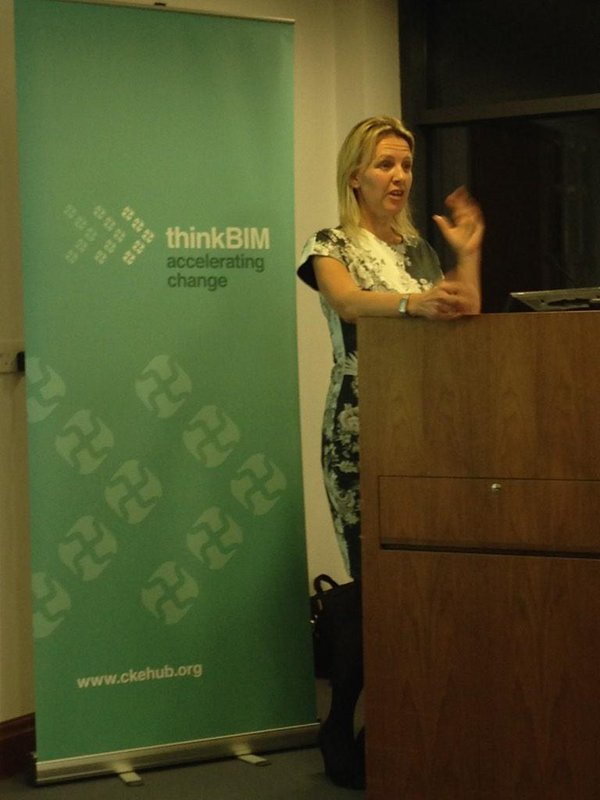
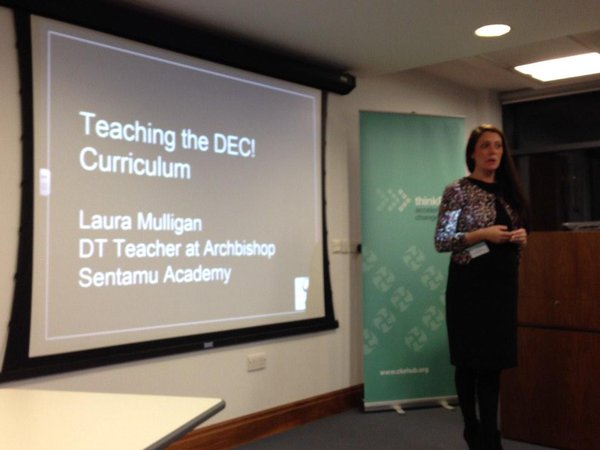
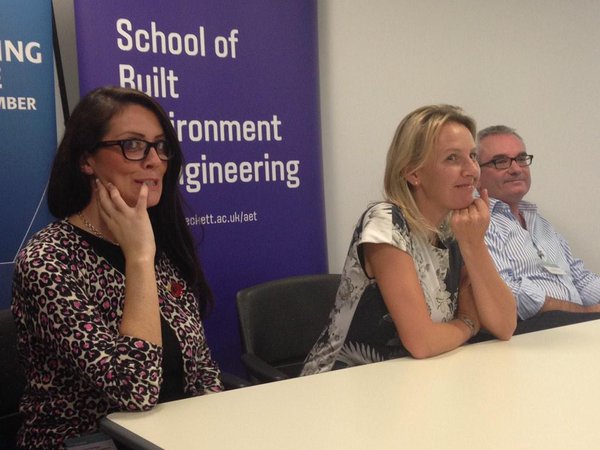
We heard from Alison Watson at Class of Your Own, the driving force behind Design…Engineer…Construct! the accredited curriculum aimed at engaging tomorrow’s construction industry professionals during their secondary education, ; Laura Mulligan one of the teachers involved at Archbishop Sentamu Academy in Hull; and finally from Rob Charlton, the Chief Executive of _spacegroup architects, sponsors of the Design…Engineer…Construct! scheme at the Academy and a strong advocate for the training of the next generation of construction professionals.

Our chair for the evening was Tom Oulton, BIM Manager at East Riding County Council and the CIC Yorkshire & Humberside BIM Hub Champion. Tom explained that ERYC has employed one of the students from the Academy as an apprentice and he is great (the student, not Tom!). Tom stated if this is the type of student they are educating then the future of our industry is safe. Tom remarked that Alison and Laura were presenting what he calls the “Houston Hypothesis” ‘I believe the children are our future’.

View image on Twitter

Alison began by saying that the understanding of the digital built environment has to start at a younger age, ideally at secondary school. Alison attended Nottingham Trent University earlier in the day and lots of contractors and academics in the room were complaining about the lack of skills such as employability skills, numeracy, literacy and practical skills. Alison believes there needs to be a big effort from the industry to engage school children but most importantly to engage school teachers and parents. We need to engage more school teachers because teachers inspire children. Often teachers can be just as important in a child’s life as a parent. Alison spoke about how valued and inspiring Laura Mulligan has become to the children she is teaching at the Academy. Alison explained that DEC! is now delivering a Level 3 course and pending UCAS points and school performance table points (making it equivalent to an A level) because of University and Industry support. Alison described how tough it had been to convince the Department for Education that our Construction Industry is worthy of an academic profile as well. The time for a new qualification has never been better. Alison explained to the professionals in the room that passing on their knowledge to teachers like Laura is fundamental if we are to take teachers who have no prior experience of the Construction Industry to the level she is at now.

Embedded image permalink

Laura started by explaining she is a design technology teacher. Laura explained the socio-economics of the area where Archbishop Sentamu academy is situated, along with historic aspirations within the locality and how the Academy is proactively working with students and their families changing these aspirations for the better. Laura talked about her background in interior design and soft furnishing working for Laura Ashley. She had some experience working on private housing sites but most of the construction industry was totally unknown when starting out with the curriculum, so links with industry professionals has helped her to develop as a teacher in using software such as Revit. Space group has worked closely with Laura to increase her skills so she can teach the children. Laura talked about how engaged the children are when the industry experts come in. For example during a land survey they didn’t want their morning breaks or lunch as they carried on working because they were so engaged. Laura asked them beforehand how many wanted to be a land surveyor and none of the students knew what this was! At the end of the session, 9 out of 11 students now want to be a surveyor after only 1 day doing a task! Standing in a field they were engaged because it’s not in the classroom.

Laura explained it’s not a tough curriculum but the industry perception is that this is the type of thing is taught at University level. They are 14-16yr old students who are younger than GCSE level but doing the equivalent and 100% pass rate is expected. Students pick their own design brief and the Year 10 students are currently working on a project relating to the 2017 City of Culture. The local area doesn’t have a youth activity centre so the Year 9 students decided to design one. Laura talked about some students who presented at BIM Show Live and people were tweeting ‘I have staff that can’t do this!’ Two 16yr old students have produced all of the student training videos on how to use Revit. The students learn faster because they are ‘like sponges’ and just absorb all the information. These videos are referred to as ‘pupil speak’ and the benefit is that if an industry expert presents to the students they may use terminology which is beyond the students comprehension, so the videos simplify the subject matter whilst still achieving the same outcome. Laura talked about 3 outstanding students in particular who at 16yrs old are equivalent to a level 6 University student and are industry ready and have done this as a level 2 GCSE equivalent. There are lots of companies wanting these students for apprenticeships.

Laura is also keen to get more girls involved and to try and change the perception of the construction industry. Laura talked about Class Of Your Own’s BEST teacher CPD programme. There are currently 8 teachers piloting this programme with a view to rolling this out and supporting other teachers in the New Year. They are producing schemes of work and teaching materials and helping to shape delivery of the curriculum and BEST programme for COYO. A large part of the success of the curriculum, and in turn the students, comes from support from the industry, which will ultimately result in the generation of candidates they will want want to employ. Laura finished by saying if any employers are interested in apprenticeships or work experience she would welcome you into the Academy to meet the students or to observe a lesson , alternatively she would love to send some of the kids from the Academy to gain ‘real-world’ experience in a construction industry setting. Laura spoke with real passion and clearly has a love for her job and the work she is doing for the students at the academy.

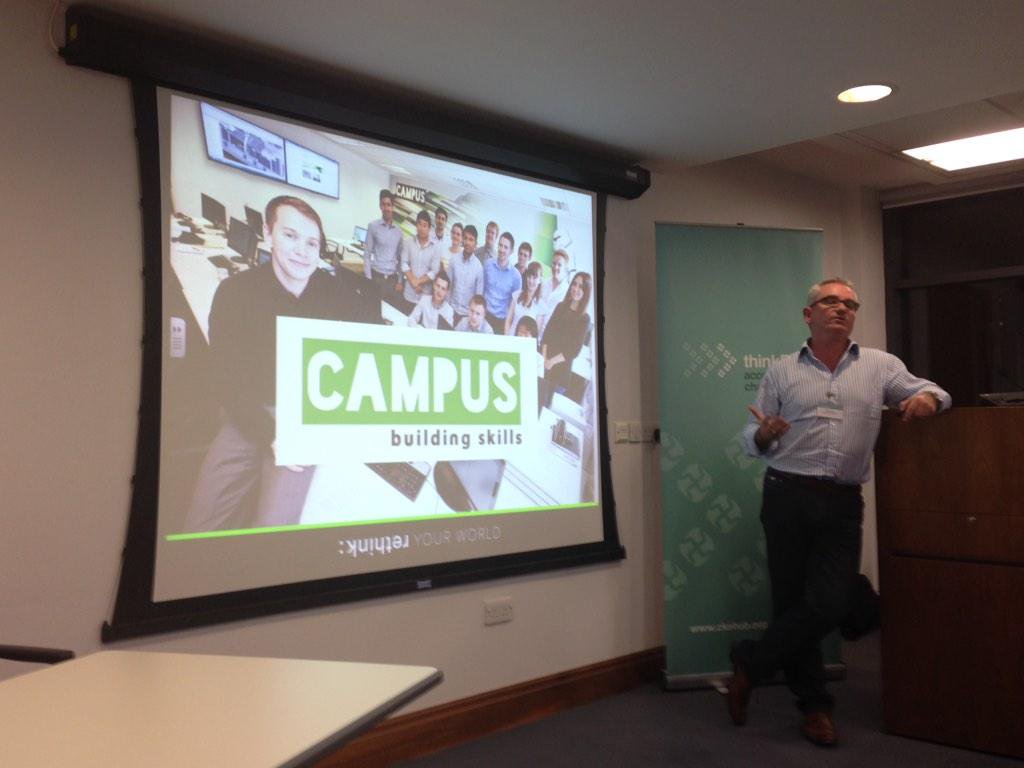
Next up was Rob Charlton from Space group. He began by praising Laura for the brilliant work she is doing at the Academy. Rob talked about us being in a revolution and used the analogy of VHS to Netflix and paper to data! Rob stated we need more young people and women in the Construction industry. Rob talked about the ‘baby boomers’ and ‘generation X’. Rob agreed that the students who spoke at BIM Show Live were brilliant. Rob explained that ‘generation Y’ won’t accept waste in Construction. They think differently and they really question things. Rob talked about how he set up CAMPUS to address the skills gap and encourage young people to enter the construction sector. 15 students started the CAMPUS programme last year. They had left University with a degree but no practical skills. CAMPUS is a 12 week intensive course and the idea is to get these students a job. 3 cohorts have been delivered so far and everyone has a job and support from the industry. Rob explained that a lot of interaction and networking was done via social media. Rob stated ‘I love construction it’s in my blood’. Rob believes we need to bridge the gap between academia and the industry and encouraged everybody to ‘join the revolution’.

Embedded image permalink

Q and A summary

Questions and Observations from the floor included:-

Q: It is really inspiring what you are doing especially when some parents tell their children not to go into Construction.

A: Laura explained that the head of the Academy is very progressive and teachers are given the opportunity to inspire children in the technical world we live in. At parents evening all the models and videos are displayed. A lot of parents are not keen on their children going to University but believe in and do see the value of Apprenticeships. Alison was concerned there is a lack of Government investment and it is not given value in schools. The skills gap is an issue that must be addressed.

Q: It is great what you’re doing. Is it difficult to get a 14 year old to commit.

A: Laura confirmed that it is not difficult. Some children know exactly what they want to do and what they want to be. Alison said that children are inspired by technology and let’s give children the opportunity to learn English, Maths and Science through a project because we want to inspire kids. You can engage children in a building project that embraces Law, Accountancy, Engineering and Construction because it is the whole package but these type of schemes need to be supported properly. Rob stated that he wants the UK to be the best Construction Industry in the world. We need to encourage young people to come into this industry. Laura talked about how her children excel when they find something they are good at. The students only spend about 10% of their time with a pen because they are so computer savvy.

The general feeling from the delegates in the room was that we are all in this together and its time for change. Rob commented that ‘If you don’t change you will die in this industry so please get on board’. Laura finished by reminding everybody that the children on this course are effectively doing a 2 year job interview. The companies who are on board with the scheme have 2 years in which to get to know these children and to mould and shape them.

Tom thanked all our speakers for their presentations and remarked that the people in the room must have been inspired.

Our next event is the GreenBIM conference on 3rd December 2014.

Lean BIM: Six reasons why construction needs to embrace BIM alongside Lean Thinking

martinbrown


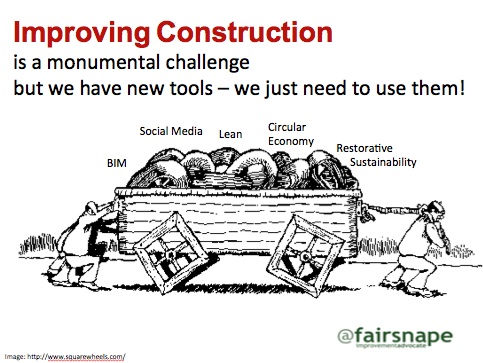
Combining Lean Construction thinking (in the shape of Last Planner approaches) and BIM (Building Information Management) on construction projects can enable big reductions on time, cost, waste and stress, and in doing so improve profits, capability, staff wellbeing and reputation.

Improving construction: we need to swap out the inefficient square wheels of yesterday for todays round wheel thinking.


My recent ‘Lean BIM’ lecture at Leeds Beckett, explored and discussed with case studies, how achieving the 30% construction strategy cost saving target is within reach.

Lean thinking and last planner approaches should be seen as collaborative working preparation for BIM. Both share similar aims – ‘producing the right product at the right time in the right quantity for the customer and to produce exactly what you need and nothing more’.

Here are 6 of the many compelling reasons for adopting ‘Lean BIM’ …

  1. BIM in conjunction with lean construction (ie Last Planner approaches) can get construction activity closer to the Honda expression of “everything we do … goes into everything we do” (Currently only 40-60% of what we do in construction goes into what we do, ie what we get paid for or hand over to our customers).
  2. BIM, like lean construction thinking forces us to focus on the end game first, understanding client value and pulling that value through design and construction.
  3. BIM, like Last Planner will reduce firefighting and stress on project management team.
  4. BIM will drive lean and predictable programming and material sequencing.
  5. BIM will streamline the supply value stream for materials, enabling just in time supply, adding value and reducing unnecessary costs.
  6. BIM will greatly assist in improving information flow and communications, between project partners and supply chain. Techniques such as the TQM / Toyota ‘5 whys‘ repeatedly shows communication as the root cause of many if not all costly problem

However, embracing both BIM and Lean has a number of essential pre-requisites, for example

  1. BIM and Lean construction both need construction leadership at organisation and at project level.
  2. Contractor core processes (eg design and construction) need to be shaped around Lean Thinking and BIM requirements.
  3. BIM Is a people collaboration mindset. Even on BIM projects, approaches such as last planner are essential to ensure people (the last planner) involvement in project short-term planning and improvement, and
  4. Early contractor and supply chain involvement with strong collaborative culture must be in place.

“The construction aspects of projects is the easy bit – “a doddle” … The harder, more complex bit is the collaborative working ‘glue’ that surrounds the design, build and operation of the facility, whether BIM is used or not” John Lorimer (In PPP Publication)

Read more of Martin’s articles on his blog here

Brilliant personal insights into 3d coordination and collaboration at thinkBIM last week

The feedback from last weeks event has been outstanding……..

‘two contrasting presentations with interesting insights ‘ (Chapman Taylor )

We were back in our home of Old Broadcasting House with over 40 construction professionals lucky enough to hear open, honest, presentations from both Stuart Clark at Constructive thinking and Peter Martin and Jason Richards from WSP … who were certainly showing that M and E can do BIM …. all presenters shared real life case studies demonstrating with live demos !

We have pulled together a storify of the event which can be found here - do have a read of some of the comments and share widely . This was exactly the type of event that thinkBIM are proud to deliver to our members … open - honest - knowledge exchange


Looking forward to seeing some of you at our next event in Hull where we will hear from Alison Watson from COYO and from some of the young BIM leaders who are emerging …. book on now here

Here are the presentations from the evening

Jason Richards & Peter Martin Presentation

Stuart Clark Presentation


Spreading the #BIMlove - BIM in Mauritius

When I was invited to Mauritius to deliver three BIM lectures to Architectural technicians, QS and Civil Engineering students on behalf of thinkBIM, a knowledge exchange network at Leeds Metropolitan University, I was excited to take up the BIM gauntlet and fly out and see if I could inspire some BIM enthusiasm amongst the digital generation out there.

The lecture room in Rushmore Business School was full with all three disciplines of students. Most of whom had not heard of BIM, some who knew a little or thought it was REVIT. These were all students who had Androids and were attentive and interested in this new subject area they had not seen before which for them ‘could change the way they work’.

Rushmore Business School is a leading international private tertiary education institution providing academic and professional courses to school leavers, graduates and the business community. The Business School is fully accredited and all its courses have been approved by the Tertiary Education Commission and the Mauritius Qualifications Authority in Mauritius and the British Accreditation Council in the United Kingdom (First in Africa).

It was brilliant, by the end of the first lecture the students were queuing up to ask more questions, discussing the potential of BIM for Mauritius, their sector and improvements in process, design and construction and opportunities for export markets such as Africa and Madagascar.

Whilst out there not only was I fortunate enough to visit the students but I was also invited to see General Construction Co. Ltd. (GCC), the largest main contractor on the island, to give a presentation on behalf of thinkBIM to the Directors and Head of Structural Engineering and Quantity Surveying (along with representatives from HR, IT). All this thanks to one of our alumni of Leeds Metropolitan University, Laurent De Senneville, now working as QS and BIM Champion for GCC Ltd.

GCC Ltd is one of the leading building and civil engineering companies in Mauritius. Founded in 1958, the company is involved in a range of activities from the design and construction of office and hotel complexes and harbour and airport development facilities to the development of roads, bridges, dry docks, pipelines and reservoirs. GCC Ltd is privately owned by Mauritian shareholders who are dedicated to hiring local labourers and further developing the island.

ThinkBIM delivered an Intro to BIM and the impact on contractors to a full boardroom, myself there in person and ThinkBIM Ambassador Duncan Reed (Digital Construction Process Manager at Tekla) via google hangout. We fended questions on implementing BIM and the opportunities for the contractor. What struck me was the positive enthusiasm of GCC Ltd which was later confirmed over lunch where our discussion focussed around Laurent driving BIM implementation within the organisation with continued support from thinkBIM.

“It has been a great opportunity for GCC to welcome Claire and discuss with her and Duncan on BIM. They both contributed in kickstarting our BIM endeavour and we are looking forward to further collaborate with BIM communities while we build our BIM strategy for the future.” Jean-Marc Desvaux, Head of IS, GCC Ltd

Laurent’s starting point is to get a BIM steering group assembled to focus on getting the organisation to Level 1 through reviewing internal processes and identifying opportunities to remove waste from their internal processes.

In order to assist GCC Ltd on their journey we have provided them with a Mentor company here in the UK (Premier Interlink WACO UK Ltd) who are an offsite manufacturing contractor based in East Yorkshire, whose BIM implementation is being led by Pete Foster. We will be setting up regular Skype calls and dial in discussions to Mauritius to share best practice, lessons learnt and progress as both organisations progress towards reaching their BIM objectives.

“We were delighted to be given the opportunity to collaborate with GCC Ltd on their BIM journey. The discussions and questions this joint venture will raise will be invaluable in progressing BIM for both parties and shows the meaning and value that BIM can provide.” Pete Foster, Head of BIM Implementation

This for me has been an example of what BIM can do, it can start discussions across the globe between individuals and organisations seeking to make Construction a sexy, streamlined sector which will attract and retain talented young students like Laurent.

#TBIM2013 Understanding Data for FM

Over 40 construction professionals gathered in the Rose Bowl in Leeds last night for what was a great event as part of thinkBIM’s summer BIM Operation and Maintenance series. Once more thinkBIM brought honest open, valuable lessons learnt in collaborative BIM to our members, demonstrating benefits that are being realised and ways of overcoming cultural barriers to change and make things happen……

Liam Brady of Manchester City Council opened the evening taking our group through the Manchester Town Hall Complex project, using excellent quotes and analogies along the way. Tom Oulton, our YH BIM Champion, shared his BIM journey so far at East Riding of Yorkshire Council with statement images, humorous analogies and open lessons learnt of the progress he has driven at the Council, Rob Jackson was our final presenter taking us quickly into the realm of Data and IFCs

Liam started out highlighting where BIM benefits are currently being reaped in the design and construction phases of the Manchester Town Hall complex, also outlining the potential benefits of BIM as a real driver for them to engage FM and attain the bigger benefits of BIM. The old Town Hall, Town Hall extension and Central Library will be run as one complex. A huge undertaking for a sector who have historically poorly maintained asset information. Liam focused on how to actually capture the information taking us to the Cabinet Office BIM on a page’ slide, indicating client requirements and BIMExecution Plans to identify what is needed at all the stages of the construction process. For the project in question BIM wasn’t mandatory but was being tested within a strong framework of partners with cabinet office support. Liam took us through the process of extracting data out of the model via Artra which is then fed into the estate management package, C Pad, creating an accurate repository of information. Underpinning this process was the need to embed the FM team within the design process. This empowered the FM team to influence design and enabled the design team to be constantly thinking about the operational implications of their design decisions. Liam described this as the ‘Cultural Mesh'; communicating to and engaging the FM teams was brought about by breaking the model down by individual systems, i.e. water sprinkler system, breaking down into systems means you can go right into the information of lifecycle service requirements and supply chain details. Without buy in to update the data in the model the data would be worthless, this was the biggest risk and so the responsibility to update lies with the FM service provider, if they don’t update, they don’t get paid.

The Town Hall Complex project has also been a pilot for soft landings which has enabled the sharing risks and responsibility and not stopped the handover arguments but it has shifted the focus of arguments from blame to solutions. Again key to its success has been engaging the full decision making group. Liam closed his presentation stressing the importance of collaborating and sharing information in order to progress in BIM and identified exciting new opportunities for BIM use on their project.

Next up, Tom Oulton spoke of how he had spent too long at the coal face of CAD, waiting for BIM to happen. Tom has now emerged from his CAD cocoon into a beautiful BIM Butterfly. Tom took us through a delightful, honest and open account of his personal ‘Battle for BIM’ and how he has managed to make it happen with limited resources and enthusiasm in the East Riding of Yorkshire Council. Tom advocated REVIT saying ‘we use it, we like it, it is doing everything we need it to do’.

Tom poetically took us through the barriers of the fear of change; the huge learning curve that people initially were not keen to embark on. The need for buy in form all parts of the organisation not just the designers and engineers but also senior management and procurement was stressed in order to enable he changes needed to make the design teams BIM enabled. Using the Monty Python analogy of ‘so, what has BIM ever done for us?’, Tom was able to show detailed progress of use of revit by the council for Beverley highways, accurately model the sanitation and drainage and design work on the fire station project for Humberside Fire and Rescue all done in house and all coordinated via navisworks. Tom highlighted the benefits of BIM on a variety of projects from Schools through to multi purpose service centres. Benefits for the Multi Purpose Facilities have been the optioneering. Tom conclude with the comment that BIM has brought PEACE for the time being, FM will be the next Battle

Last but by no means least was a techy, nitty-gritty presentation from Rob Jackson of Bond Bryan, the passionate advocate for openBIM as industry wide standards. He took us through an abridged version of his sellout BIMShow live presentation ‘The Good, The Bad and The Ugly’.

Rob started with their frustration of the need to demonstrate we can deliver data to FM and clients, emphasizing that to get to FM, we need to understand the beginning bits of the process. Key to this process is creating reliable and useful models in terms of both geometry and data. Rob’s passion for reliable data exchange and IFCs in order to deliver projects came across, encouraging us to look at IFC for Level 2 delivery.

Rob stressed the importance in both importing and exporting between software solutions highlighting that Bond Bryan as a practise, although ArchiCAD users, have bought both Revit and Navisworks so that they can test and deliver models as per client requests. Rob’s message was clear and strong regarding the need for the construction sector as software vendor clients to push for improvements in interoperability. There is a lot of talk about IFCs not working when often it is user error or indeed modeling in different ways in different softwares. Rob took us through the detailed tests he has been carrying out between a variety of softwares, findings of which he is currently sharing with software vendors to enable changes and improvements. Often when we think of interoperability it is presumed we are discussing problems between different software vendors but in fact, Rob indicated that there are even problems within softwares from the same manufacturer (i.e. two Autodesk products)… key is to test and pilot exchanges between softwares.

Rob brought his presentation to a close notifying us all of the positive feedback he has recently had from Autodesk, indicating that indeed the customers have not been asking the right questions and making a plea for all to push vendors to improve as being able to work in different software environments is important.

A lively Q and A focused on People as the main barrier to effective adoption and implementation of BIM within organisations and the need to present the benefits to all; questions on interoperability highlighted the need to test and push software companies to make things work especially on the FM side to set the agenda.

A packed out event , taking BIM to the next level !

Over 50 construction professionals including contractors, consultants, architects, engineers academics and students filled the lecture theatre in the Rose Bowl in Leeds last week for what was a great start to our thinkBIM’s spring BIM: Construction and Assembly series.

Members of The BIM Academy Build Qatar Live Competition Winning team shared their experience and lessons learnt from the intensive 48hr competition, testing multi-disciplinary collaborative BIM to the maximum in a very high pressure environment, utilising up to 30 different softwares (some of which I have highlighted below).

Founder of the Build Live competitions and COO of Asite, Nathan Doughty, opened and chaired the evening stressing the BIM Academy teams’ excellence in organization and delivery due to their existing working relationships, a set of common goals and an appetite to test a variety of BIM tools.

Peter Barker kick-started the presentations with 3 key critical success factors for them as a team: Rigorous forward planning ; team working with clear lines of responsibility and good communication .George Mokhtar, senior BIM Coordinator for BIM Academy gave an impressive account of their 48hr experience and their winning performance with detailed information on costing presented by Dave Monswhite cost manager for Turner and Townsend , architectural design by Jonnie Flavin, Ryder Architecture, model validation process and COBie information by Michael Serginson, BIM Academy and Dave Fuller from NBS providing specification information.

George opened the evening taking our group through the Build Qatar Live pre-planning and set up of the team that was undertaken, stating and stressing the importance of initial clarity of team roles, BIM uses, Modelling standards, formats of information exchange and programming in 20 min chunks. Jonnie provided an insight into the design process and how the team responded to the brief with thoughts on spatial issues, context (including views out back to Doha), adjacency as well as historical aspects. Lots of early on debate on massing and scale with sketches and diagrams coming thick and fast, working with Felt tip pens and BIM concurrently.

George referred to the three stages of the project as Mass Model, Design Model and the Model Federation for which the co-location was key as scope for misunderstanding information was minimized in a shared space. The real time mass model, allowed instant scheduling of floor areas and gave consultants confidence of the concept going forwards.

Work in Progress (WIP) models from the design team were uploaded to Asite as IFC. These were downloaded and opened in Solibri Model Checker to be validated. Various aspects checked including space properties, overlapping intersections and duplications. Relevant information was highlighted and reported back via Asite with comments and actions. This allowed the team to review the models for any major clashes and discrepancies within approximately 30 minutes, improved collaboration and reduced the potential for iterative design further on in the project. The model validation also provided the cost management team with an accurate model, allowing for greater cost precision at an earlier stage in the project.

Dave Monswhite described the project as ‘like a freight train’ with sub groups having to work in parallel to achieve the outcomes required in the tight time frame. 4D was implemented linking the project construction programme through to Navisworks, allowing the to create construction simulations highlighting any issues with site logistics. The model was being used to inform the cost plan , this was done open source linking validated IFC data into COSTx software, using Qatari cost data. He highlighted the use of individual parts of the federated model to allow different disciplines of building to be taken off at the same time without a clash ‘Quantum is quantum’. For him, quantity wise there is no need to use federated model in these circumstances.

George indicated up to 30 different types of software used throughout the process, indicating the use of Tekla BIMSight as a ‘sanity check’ for clash detection as they progressed. iCIM, the Interoperable Carbon Information Model (iCIM) TSB research project into BIM and financial and environmental cost information gave the capabilities of changing specification and monitoring differing Carbon levels via a carbon monitor on the screen. He also indicated a open source pedestrian modeling tool ‘Steps’ an agent-based micro-simulation tool developed by Mott MacDonald for the simulation of pedestrian movement under both normal and emergency conditions.

Dave Fuller took us through the performance outline and detailed specification work through out the project stressing that the specifications were created as exports from the model, using NBS Create to automatically generate the spec from the model. He described three levels of specification that were developed through the scheme and spoke about how the first version gave a level of detail comparable to the overall model and then subsequent further information was added as the level of detail of the overall model geometry was increased.

The initial brief had been issued as an existing site model and project information in the form of COBie. During the competition the teams had to upload COBie drops on Asite. Rather than the normal 5 for a project this was restricted to three for the competition.

George stressed the importance of having 4 disciplines working together, actually incorporating information into the model.

For the logistics planning and 4D simulation Asta power project was used and then linked into Navisworks to highlight pinch points that were identified at set times of construction.

George brought the presentations to a close with a summary of over 100 documents uploaded to Asite throughout the process and the last minute drama of the gas leak at Northumbria University which nearly lead to the team being unable to submit their final submission document on time!

An interesting Q and A followed with questions focusing on actual processes of getting information into COBie spreadsheets, use of IFC and a broad range of softwares to the benefits these types of competitions can bring to industry and academia as a place where boundaries can be pushed and innovation really happens.

#TBIM BIM Design and Preconstruction: BIM Leeds Arena – Practical BIM Benefits of Design & Supply Chain Collaboration

Over 60 construction professionals including contractors, consultants, architects, engineers academics and students filled the lecture theatre in the Rose Bowl in Leeds last Wednesday for what was a great event as part of thinkBIM’s autumn BIM: Design and Preconstruction series. BIM leaders shared openly and candidly their experience and lessons learnt of BIM use on the award winning Leeds Arena project, an excellent case study shared with our regional members.

 
Richard Beaumont of BAM opened the evening taking our group through the regional BAM BIM project: The Leeds Arena, in an open and honest account of learning by doing. Neil Hooton, multi disciplinary project manager for Arup talked us through their move away from historical inefficiencies of 3D-2D-3D and detailed their involvement on picking up design through to delivery. Mark Magill of Creagh Concrete talked Precast and BIM and also commended the team for working so well together and being bought into the process. Adrian McCoy from, Fisher Engineering ltd brought the presentations to a close with a focus on their steelwork working in 3D with Tekla.
Richard Beaumont of BAM gave an overview of the Leeds Arena project and its choice as the BIM project for the region, this was new for BAM but there was some key members of the project team already doing some 3D and 2D output. Realising nobody gives you BIM in a box, they started out on their self learning journey attending ThinkBIM and sharing knowledge with designers and supply chain. They then set up their own protocols, not a chunky unused document but a 7 page document that will now be rolled out nationally.

 
Neil Hooton of Arup rewound to pre construction and moved us from the flawed historical Process of the industry creating the model in 3D then giving to the contractor in 2D then for the supply chain to convert back into 3D. This project was different and enabled true collaborative BIM. The models were used with the HSE in design team meetings to prove build ability; used to revise geometry – showing image of savings of over 40t of steel with one detail change alone.They were even able to model the trucks for the new loading bay to prove that the design worked : an excellent client engagement tool.

 
Mark Magill of Creagh Concrete gave an insight into the use of BIM for the precast. They use BIM for a variety of model types: Tender models; 3D modelling design and detailing Manufacturing; creating logistics models through to site erection - visualise how to erect. Mark promoted the use of colour in models for highlighting detail and manufacturing differences. The benefits for them were that manufacturing errors were virtually eliminated and that the implementation of BIM has created an overall improvement in their QA processes and procedures.
Adrian McCoy began his presentation with a key point - historically designer’s models had been created primarily for analysis and weren’t necessarily accurate enough geometrically to be used for the manufacturing process.On this project however, Fisher were able to take geometrically accurate Revit models, that were issued by Arup and exported as ifc files, straight into Tekla and develop them into a full manufacturing model. Adrian also spoke about the benefits of model sharing and clash detection, by webex to be more sustainable. Models were shared between Fisher and Creagh on a weekly basis and more formally around the wider team on a fortnightly basis. Clash detection sessions were typically able to resolve 200 issues in a morning meeting.

 
Fisher was also able to reduce the risk of site installation works by utilising BIM. The main proscenium arch was a 170t truss that required two 500t cranes to lift it into place and hold it in position for a 72 hour period whilst further continuous steel erection took place to hold the truss in place. The whole lift was planned for 18 months and successfully carried out – with the truss being installed within 2mm of its theoretical position.

 
A lively Q and A focussed mainly around client expectations, both now and in the future, and how contractors will pass on the benefits of BIM. Design responsibilities in a BIM environment were also discussed and whilst it was agreed that BIM isn’t a golden bullet it does help encourage better collaboration between teams.

Older posts

© 2016 ThinkBIM

Theme by Anders NorenUp ↑